Popular Tags
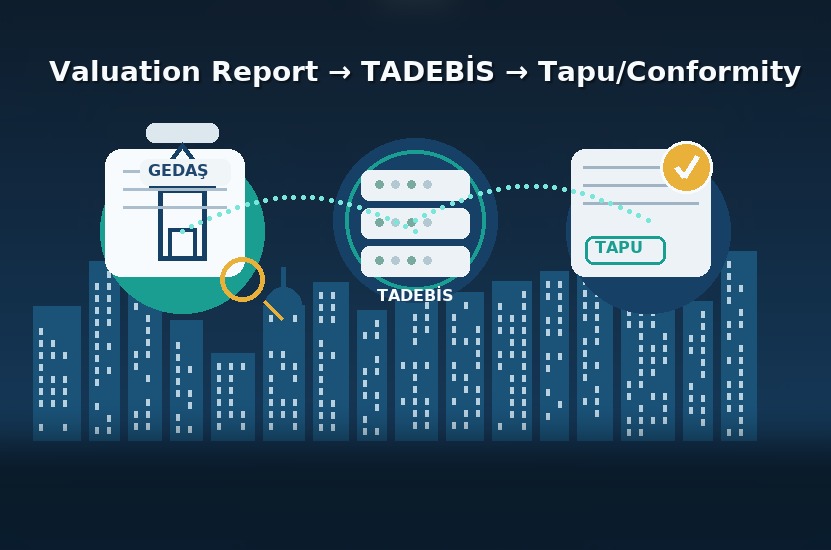
Property Valuation Reports for Foreign Buyers in Turkey (2026 Guide)
Property Valuation Reports for Foreign Buyers in Turkey: Thinking about buying property in Turkey—or qualifying for Turkish citizenship by real estate? A valuation report is not just a formality; it’s a mandatory document at key stages and it must be prepared in a very specific format. This guide explains who issues it, what it contains, how to apply, timelines, and common pitfalls—in plain English.
1) What is the valuation report?
A valuation report is an independent, standards-based assessment of a property’s Market Value and, where relevant, its Legal-Use Market Value. It must follow International Valuation Standards and national rules, include on-site and legal checks, and be produced and delivered through official systems.
Why it matters for foreign buyers
-
It’s required in transactions where the buyer is a foreign national.
-
For the citizenship-by-real-estate route, the valuation proves the investment meets threshold and compliance expectations and supports the certificate of conformity process.
2) Who is allowed to prepare it?
-
For citizenship-by-real-estate transactions: valuation reports must be prepared by GEDAŞ Gayrimenkul Değerleme A.Ş. (a TOKİ affiliate).
-
For other transactions: a CMB-licensed valuation company (member of the national valuers’ union) can prepare the report.
Practical takeaway: If your end-goal is citizenship, instruct GEDAŞ from the outset to avoid repeat costs and delays.
3) How do you request the report?
-
Submit online via Web Tapu (official e-title portal).
-
The system assigns the authorized valuer and tracks the workflow in TADEBİS; finalized reports are transferred to TAKBİS (land registry system).
-
You’ll receive fee and reference details by SMS/e-mail; once paid, the assignment proceeds.
Validity: Reports used in land-registry procedures are valid for 3 months. If the validity lapses—or if the property’s legal/physical status changes—you must request a fresh report.
4) What does the report include?
-
Identity of the property (parcel/unit numbers) and zoning/title checks
-
Legal vs. actual (on-site) status comparison, with discrepancies drawn on project plans
-
Brüt usage areas (legal and current, defined precisely)
-
Minimum photo set (at least three clear photos, including interior)
-
Market Value (basis for registry) and Legal-Use Market Value (for information)
-
Methodology & adjustments (why the value was determined; comparable map with point-level markers)
-
Signatures: at least three professionals (responsible valuer, reviewer, valuer), e-signed
5) Special notes for new builds & renovations
-
Incomplete (natamam) projects: the valuer assesses value considering completion costs and risks; if construction hasn’t effectively started or the permit status requires renewal, valuation may not be provided.
-
Major alterations: require amended permits; otherwise no compliant value can be issued.
-
Common areas (corridors, shafts, shelters, etc.) are not counted into the apartment’s legal gross area.
6) How this ties into Citizenship by Real Estate
-
Ensure your citizenship pathway is planned before paying. For citizenship-eligible deals (deed transfer or fully-prepaid notarized promise), instruct GEDAŞ for the report.
-
Align valuation, official sale price, and FX/DAB documentation—figures should be coherent across all documents.
-
Record the 3-year no-sale undertaking at the registry.
-
After the registry step, obtain the certificate of conformity, proceed with the investor residence permit, then the citizenship application for you and eligible family members.
7) Mistakes that delay files (and how to avoid them)
-
Wrong issuer (non-GEDAŞ report for a citizenship file) → always specify citizenship intent when applying.
-
Expired report (over 3 months) or changed legal/physical status → renew before registry.
-
Plan mismatch (unit shown on site doesn’t match approved plan) → fix numbering/plan issues first.
-
Incomplete evidence (weak photos, unclear comparable map) → ask your firm to check TADEBİS completeness.
-
Value inconsistencies between valuation, contract/deed price, and FX/DAB amounts → reconcile before filing.
8) Timeline & checklist
Typical timeline (well-prepared case)
-
Engage counsel & bank → structure payments and FX (for DAB).
-
Web Tapu request → fee payment → TADEBİS assignment.
-
Site/legal checks → draft valuation → e-sign → transfer to TAKBİS.
-
Registry step (with 3-month valid report).
-
Conformity certificate → residence permit → citizenship.
Buyer checklist
-
Web Tapu access set up; passport & tax number ready
-
Clear citizenship intent stated (so GEDAŞ is assigned)
-
Approved architectural plans accessible
-
Unit/parcel numbers consistent across valuation, DAB, deed/contract
-
Report validity date diarized (≤ 3 months)
9) How Tenha Law Firm helps
-
Single point of contact across bank, valuer, registry and ministries
-
Pre-checks to eliminate plan/numbering inconsistencies
-
Document choreography so valuation, DAB and deed line up
-
End-to-end filings for you and your family, with multilingual support
Disclaimer: This guide is general information and not legal advice. Procedures and thresholds can change—contact us for tailored counsel.
Source: 2024/2 valuation circular and procedures